
.jpg)
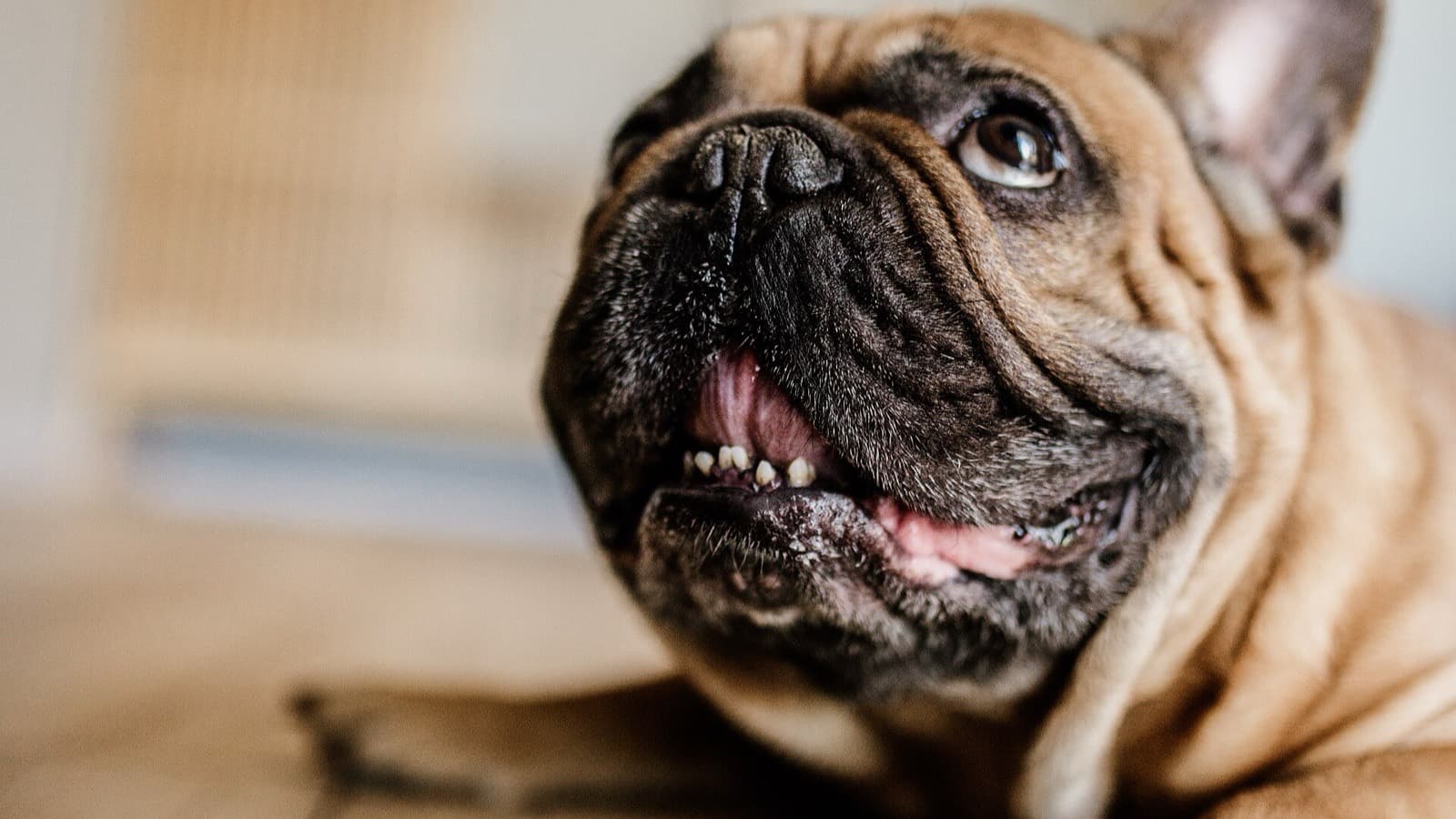
Flat faced dogs such as French Bulldogs, Pugs and English Bulldogs have a high rate of health problems because the shape that makes them appealing is the shape that causes them harm. Selective breeding for a short muzzle has compressed the soft tissue of the nose and throat into a smaller space, which obstructs the airway, and the same conformation brings eye disease, skin fold infection, difficulty giving birth and poor heat tolerance. They are not unhealthy by accident. They are unhealthy because of choices people made about how they should look.
I have put this near the top of the list for applicants because it is the welfare issue you are most likely to have seen with your own eyes. If you have spent any time in a small animal practice you will have met a Frenchie who was struggling to breathe in the waiting room, and that observation is worth more at interview than anything you can read here.
It will not come up in every interview. But it is a favourite of ethics stations because it sets a genuine conflict in front of you: people love these dogs, breeders supply what buyers want, and the animals pay for it. If you want the wider picture first, our guide to the veterinary hot topics for your vet school interview covers the ten issues that come up most, and our common vet school interview questions guide covers the themes behind them.
What is a brachycephalic breed?
Brachycephalic simply means short headed. In a brachycephalic dog the bones of the muzzle are dramatically shortened, but the soft tissue inside is not shortened to match. The result is a normal quantity of tissue packed into a much smaller space, which is the root of most of what follows. The best known breeds are the French Bulldog, the Pug, the English Bulldog and the Boston Terrier, and cats are affected too, with the flat faced Persian and Exotic Shorthair showing similar problems.
It is worth being precise here, because interviewers notice when a candidate can explain a mechanism rather than just express sympathy. The problem is not the short nose itself. It is the mismatch between the shortened skeleton and the unshortened soft tissue.
Why do flat faced dogs struggle to breathe?
The collection of problems is called brachycephalic obstructive airway syndrome, or BOAS, and it is worth knowing that term. Several features combine. The nostrils are often narrowed, so air struggles to get in at all. The soft palate is too long for the shortened mouth and hangs into the airway. The trachea may be narrower than it should be.
Over time the effort of pulling air past these obstructions draws tissue in the larynx inward, which narrows the airway further, so the condition tends to worsen with age.
The consequences go well beyond snoring, which many owners have been told is normal and even endearing. Affected dogs may be unable to exercise, may struggle to sleep properly because breathing is easier when awake and upright, may collapse in warm weather, and may regurgitate frequently because the effort of breathing affects the gut. Surgery can widen the nostrils and shorten the soft palate and often helps considerably, but it corrects a problem that breeding created rather than curing the animal.
If you can explain that sequence at interview, even briefly, you will stand apart from candidates who only say that these dogs cannot breathe well. Interviewers notice a mechanism.
What other health problems do brachycephalic breeds have?
Airway disease gets the attention, but the same conformation brings a cluster of other problems, and knowing two or three of them shows an interviewer that your understanding is more than headline deep. The shallow eye sockets leave the eyes prominent and exposed, so corneal ulcers are common and in severe cases the eye can prolapse. Deep facial skin folds trap moisture and become infected. Crowded teeth in a shortened jaw cause dental disease.
Many of these breeds also cannot give birth normally, because the puppies' heads are large relative to the mother's pelvis, so planned caesareans are routine in Bulldogs and French Bulldogs. Screw tailed breeds carry vertebral malformations that can compress the spinal cord. And because dogs lose heat mainly by panting, an obstructed airway makes heat stroke a genuine and sometimes fatal risk on an ordinary warm day.
| Problem | What it actually means for the dog |
|---|---|
| Obstructed airway (BOAS) | Struggles to breathe, exercise and sleep; often worsens with age |
| Heat intolerance | Cannot pant effectively, so warm days carry a real risk of heat stroke |
| Eye disease | Prominent, exposed eyes prone to ulcers and, at worst, prolapse |
| Skin fold infection | Warm damp folds become sore and infected and need daily care |
| Dystocia | Cannot usually whelp naturally, so caesareans are routine |
| Spinal malformation | Screw tailed breeds may carry vertebrae that compress the cord |
| Dental disease | Normal tooth count crowded into a shortened jaw |
Why are flat faced dogs so popular?
This is the part applicants tend to skip, and it is the part that makes the ethics interesting. These breeds are popular because their faces are genuinely appealing to us. Large forward facing eyes and a small nose resemble the proportions of a human infant, and people respond to that instinctively. Add visibility through social media, celebrity ownership and their suitability for flats and city living, and demand rose very quickly.
It matters at interview because it explains why simply telling owners they have made a bad choice does not work. Most owners of flat faced dogs love them enormously and did not know what they were buying into. Several owner surveys have found that people often normalise the noisy breathing, describing a dog with significant airway disease as healthy. Any answer that treats these owners as villains has misread the situation.
What is the veterinary profession doing about it?
The profession has been vocal. The British Veterinary Association has campaigned on the issue for years, urging advertisers and retailers to stop using flat faced dogs in marketing on the grounds that it normalises a shape associated with suffering. Vets are encouraged to record and discuss conformational disease openly with owners rather than treating it as inevitable.
There are practical schemes too. A respiratory function grading scheme, developed with the Kennel Club, assesses breeding dogs for airway disease so that breeders can select away from the worst affected animals. Some European countries have moved further and restricted the breeding of the most extreme conformations, and that direction of travel is a reasonable thing to mention at interview provided you do not overstate where any particular country has landed.
Alongside this sits the trade in low welfare imports. High demand and high prices have driven puppy smuggling, including underage puppies, pregnant bitches brought in to whelp, and dogs with illegally cropped ears. It is a good example of how a welfare problem in one place creates a market that causes harm somewhere else.
Example vet school interview questions on brachycephalic breeds
In mocks, the topic tends to arrive in one of these forms. Notice how few of them are really about anatomy. Almost all of them are about what you would say to a person.
| Question you might be asked | What the interviewer is testing |
|---|---|
| Should breeds like the Pug be banned? | Whether you can weigh welfare against personal freedom |
| A client asks if they should buy a French Bulldog. What do you say? | Advising honestly without lecturing |
| Why do people keep buying these breeds? | Whether you understand owners rather than judge them |
| Is it ethical to perform a caesarean on a breed that cannot whelp? | Reasoning where treating the animal sustains the problem |
| Should vets refuse to treat flat faced dogs? | Understanding a vet's duty to the animal in front of them |
| Whose responsibility is this: breeders, owners or vets? | Seeing a shared problem rather than a single villain |
| What would you say to an owner who thinks the snoring is cute? | Communicating an unwelcome message kindly |
How to answer a vet school interview question on flat faced breeds
Most often it arrives as a client question: a client tells you they are about to buy a French Bulldog puppy and asks what you think.
The answers that land are the ones that stay useful to the owner. "I would want to be helpful rather than preachy, because if I lecture them they will just stop asking me things. So I would start by asking what drew them to the breed, because that tells me whether it is the look, the size or the temperament, and some of those I can meet another way. Then I would be honest about what we see in practice.
I would explain that a lot of these dogs struggle to breathe, that it is not just snoring, and that many need surgery or cannot cope with warm weather or exercise."
"If they still want one, and plenty will, I would try to make it the healthiest version of that choice. I would talk about looking for a breeder who uses the respiratory function grading scheme, about seeing the puppy with its mother, about avoiding the most extreme flat faces, and about pet insurance, because these dogs cost a lot to look after.
And I would be clear I am happy to see them either way, because the dog they end up with deserves a vet regardless of how it was bred."
That answer keeps the dog's welfare, the client relationship and plain human behaviour in view at the same time. It does not pretend the vet can veto the purchase. It gives the owner something to act on rather than only something to feel bad about. And it quietly demonstrates that the candidate understands why the profession campaigns on conformation without sounding like they are reciting a campaign.
Two opposite errors are common here. The first is moral outrage: saying nobody should own these breeds, which is a position rather than an answer and helps no dog. The second is the opposite, treating it as pure customer service and saying it is the owner's choice, which dodges the welfare duty that made you want the job. A third, easy to fall into, is talking only about breathing when the eyes, the skin, the caesareans and the heat all matter too.
How to prepare brachycephalic breeds for your vet school interview
Learn what BOAS stands for and be able to explain the mechanism in two sentences. Know three problems beyond the airway. Understand why the breeds are popular, because that is what turns a rehearsed answer into a thoughtful one. Then find your own example. If you saw a flat faced dog on work experience, what did you notice about its breathing, and what did the vet say to the owner?
It also pairs naturally with other topics. The cost of surgery for these dogs connects to the cost of veterinary care, and the emotional weight of seeing preventable disease connects to why vets leave the profession. Interview preparation, including practice at holding a kind but honest line with a client, runs through The Vet Offer Programme.
Common questions
Are flat faced dogs unhealthy?+
Many are. Breeding for a short muzzle packs a normal amount of soft tissue into a smaller space, which obstructs the airway and causes brachycephalic obstructive airway syndrome. The same conformation brings prominent eyes prone to ulceration, infected skin folds, crowded teeth, difficulty giving birth and poor heat tolerance. Severity varies between individuals, and some dogs are far more affected than others.
What is BOAS in dogs?+
BOAS stands for brachycephalic obstructive airway syndrome. It describes the combination of narrowed nostrils, an overlong soft palate, a narrow windpipe and, over time, inward collapse of tissue in the larynx. Together these obstruct airflow, so affected dogs struggle to breathe, exercise, sleep and cool themselves. Surgery can widen the airway and often helps considerably.
Why can't Bulldogs give birth naturally?+
Selective breeding has produced puppies with large heads relative to the mother's pelvis, so many Bulldogs and French Bulldogs cannot deliver naturally and need a planned caesarean. This raises an ethical question vets discuss openly: a surgical intervention makes it possible to continue breeding animals that cannot reproduce without help.
Should brachycephalic breeds be banned?+
It is genuinely contested. Supporters of restriction argue that no animal should be bred into predictable suffering, and some countries have limited the most extreme conformations. Others argue that bans push breeding underground, penalise responsible breeders and remove the incentive to improve the breeds gradually through health testing and grading schemes.
Do vet schools ask about brachycephalic breeds at interview?+
It can come up, usually as an ethics scenario about advising an owner rather than as a test of anatomy. UK vet school interviewers are looking for whether you can hold animal welfare and the client relationship together, explain a problem clearly, and avoid either moralising at owners or dodging the welfare issue.