
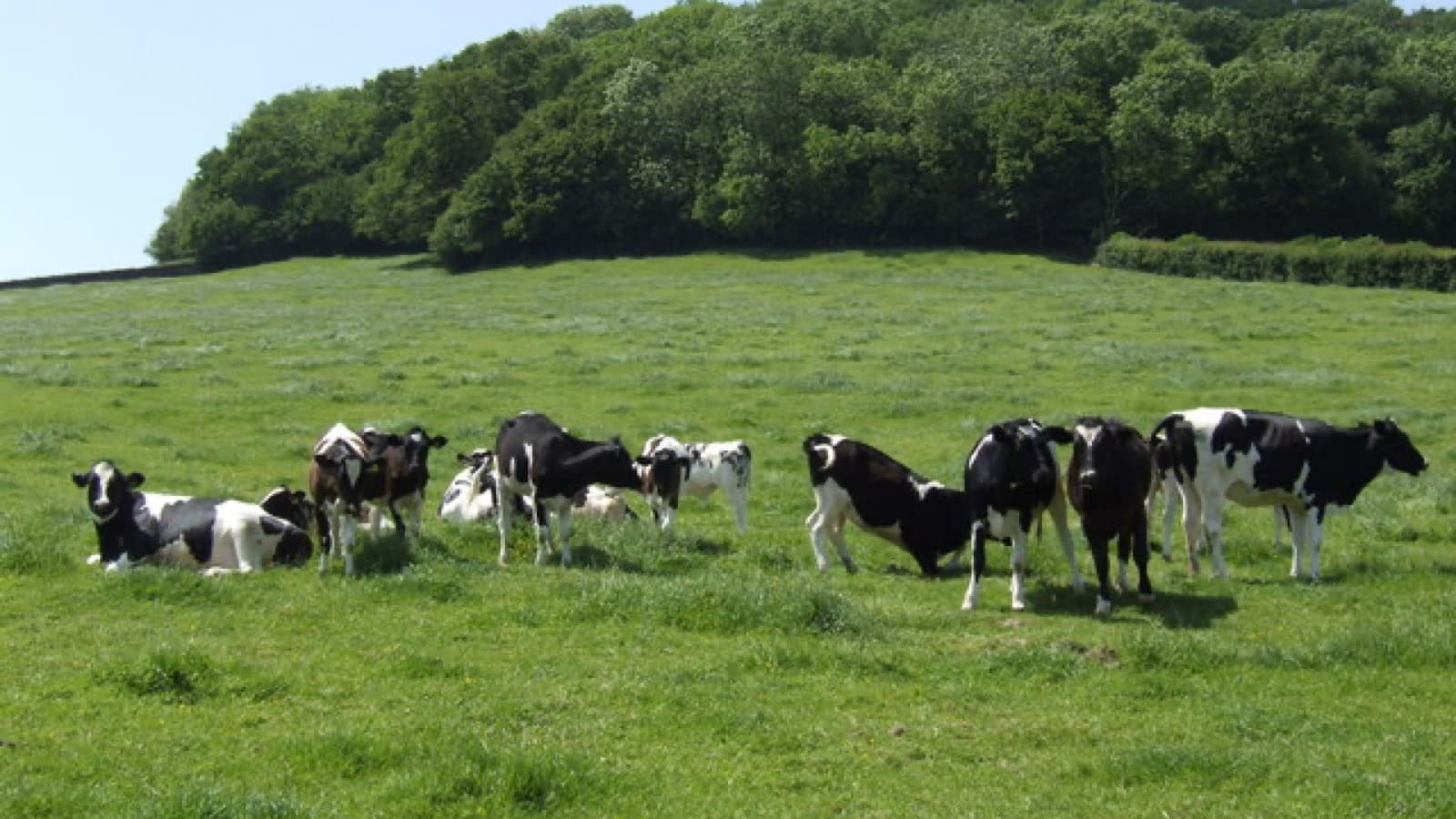

Bovine tuberculosis is a chronic bacterial disease of cattle caused by Mycobacterium bovis, which can also infect other mammals including badgers, deer and, rarely, people. In the UK it is controlled through routine herd testing, movement restrictions and compulsory slaughter of cattle that react to the test, and tens of thousands of cattle are slaughtered each year as a result.
Badgers have been culled in parts of England because they can carry M. bovis and are believed to contribute to transmission back into cattle, but how much difference culling makes is genuinely contested among scientists. The badger is also a protected species under UK law, which is one reason the policy is opposed by many conservationists and some vets.
This is the classic balanced discussion question. An interviewer asking about the cull is rarely testing whether you have memorised the policy. They are testing whether you can hold two legitimate positions in your head at once, weigh evidence that does not point neatly one way, and then commit to a view without pretending it is the only reasonable one. That is a markable skill, and candidates who lack it do not score, however much they know.
It may or may not come up directly. Some panels ask every year, some have not asked in a decade. But the skill it tests appears in every ethics station, which is why it gets a full article rather than a paragraph in our overview of veterinary hot topics. For the station formats you will meet, see our guide to vet school interview questions.
What is bovine TB?
Bovine TB is caused by Mycobacterium bovis, a slow growing bacterium closely related to the organism causing tuberculosis in humans. In cattle the disease is chronic and insidious. An animal can be infected for months or years before showing anything obvious, and the textbook picture of weight loss, chronic cough and enlarged lymph nodes is something vets here now rarely see. Most cattle that test positive look well on the day they are taken.
M. bovis has an unusually broad host range, infecting badgers, deer, camelids, goats, pigs, cats, dogs and people. Human infection is uncommon here because milk is pasteurised and cattle are tested, but historically it caused a great deal of human tuberculosis, particularly in children who drank raw milk. Bovine TB is notifiable, which puts it in the same category as avian influenza, where the state rather than the farmer ultimately decides what happens.
You will rarely be asked to define bovine TB at interview, but a candidate who can do it in a sentence before offering a view sounds immediately more credible than one who launches straight into badgers.
Why is bovine TB so hard to control?
Three things make this disease unusually stubborn, and naming all three puts you ahead of most candidates. The first is the slow, silent infection. An animal may be shedding bacteria before anyone suspects a problem, so by the time a breakdown is found it has often circulated for months.
The second is the diagnostic test. The tuberculin skin test does not detect the bacterium at all. It detects the immune response to tuberculin injected into the skin, comparing bovine and avian tuberculin so that exposure to environmental mycobacteria does not produce a positive. Its specificity is high, so false positives are relatively uncommon, but its sensitivity is imperfect, so it misses genuinely infected animals each round. That is why testing is repeated: you do not clear a herd in one go, you gradually strip infection out.
The gamma interferon blood test is more sensitive but less specific, condemning more animals that were never infected. No test is excellent at both, and understanding that trade off is one of the most useful things you can bring into an interview.
The third is the wildlife reservoir. Even perfect cattle testing struggles if the organism persists in free living wildlife that cannot be tested or restricted. That is where badgers enter, and where the science stops being purely technical and becomes political.
How is bovine TB controlled in the UK?
The system is built on surveillance and removal. Herds are tested at intervals set by the risk level of the area, more often in high incidence parts of England and Wales. Testing is delivered partly by the Animal and Plant Health Agency and largely by private vets under contract, so it is routine work many farm vets do weekly. Policy is set by Defra in England, with the devolved nations taking their own approaches.
An animal that reacts is compulsorily slaughtered, with compensation paid, and the herd goes under movement restriction, which is what a breakdown means, until it passes a sequence of clear tests. On top sit pre-movement testing, risk based trading, abattoir surveillance and biosecurity such as badger proofing feed stores. Every measure is reasonable and none alone is sufficient, which is why this disease has proved so difficult.
Understanding these measures matters at interview, because most of the disagreement about badgers is really a disagreement about whether cattle measures alone can ever be enough.
What does bovine TB cost farming families?
The financial cost is very large. Tens of thousands of cattle are slaughtered in Great Britain each year because of bovine TB, and the annual bill to the taxpayer for testing and compensation runs into the order of a hundred million pounds. Compensation does not make a farmer whole. It does not cover a lost breeding line, feeding animals you cannot sell, or a long shutdown.
The human cost is what applicants most often miss, and what makes an answer sound like it came from someone who has stood in a crush pen. I have watched farmers who could name every cow in the shed, whose grandparents bred the maternal line, watch reactors loaded onto a lorry. If you saw TB testing on a farm placement, capture it in your work experience reflections, because a concrete memory beats a memorised fact.
It weighs on vets too, and delivering that result repeatedly to families you have known for years is part of the emotional load I discuss in why vets leave the profession.
Why are badgers part of the picture?
M. bovis was first found in a badger in the early 1970s, and infected badgers have been documented in high incidence areas ever since. Badgers can carry the organism, become clinically diseased, and excrete bacteria in urine, faeces and respiratory secretions. Molecular typing shows badgers and cattle in the same locality frequently share a strain, so infection clearly moves between the two species.
What that does not tell you is the direction or the proportion. Shared strains are consistent with badgers infecting cattle, cattle infecting badgers, and both at once, which is the most likely reality. Cattle to cattle transmission, particularly movement of undetected infected animals between farms, is also a major route and the one we can most directly control.
So badgers are part of the epidemiology of bovine TB in Britain, and the size of their contribution is uncertain. Saying flatly that badgers are the cause, or that they are irrelevant, goes beyond the evidence.
Does the badger cull work?
Be careful here. This is a live argument between serious people, not a question with a hidden right answer your interviewer is waiting for.
The central evidence is the Randomised Badger Culling Trial, a large government funded field trial running from the late 1990s into the mid 2000s, overseen by the Independent Scientific Group. It compared proactive culling, reactive culling in response to breakdowns, and untouched controls. Proactive culling reduced cattle TB incidence within culled areas but increased it on land immediately surrounding them.
The explanation is the perturbation effect: badgers hold territories, and killing some disrupts that structure so survivors range more widely, carrying infection with them. The reactive arm was halted early, and the group concluded culling could make no meaningful contribution to controlling cattle TB.
That is not the end of it, which many applicants do not know. Longer term follow up showed the benefit inside proactively culled areas persisted for some years after culling stopped, while the edge effect faded, which changes the balance sheet. Later industry led culls in England were accompanied by analyses reporting reductions in herd incidence, and supporters argue that culling across larger contiguous areas with hard boundaries addresses the perturbation problem.
Critics answer that those culls were not randomised controlled trials, that cattle measures tightened at the same time so effects cannot be cleanly separated, and that some analyses have been contested.
So both statements are defensible: culling has been associated with reduced cattle TB in some settings, and the evidence that it is an effective, proportionate national policy is weaker than supporters often imply. The British Veterinary Association has taken positions that shifted over time, and there are respected vets on both sides. I find this one genuinely difficult, and I say so to the applicants I coach. Saying that, and explaining exactly why, is far stronger than manufacturing certainty you do not have.
The case for and the case against, side by side
It helps to see both columns at once. In mock interviews I ask candidates to argue the side they disagree with, and it is remarkable how often that softens a position that felt obvious.
These are not symmetrical arguments. One column is about disease control, livelihoods and the cost of inaction. The other is about evidence quality and wildlife protection. Strong candidates notice the two sides are partly talking past each other, and say so.
| The case for culling badgers | The case against culling badgers |
|---|---|
| Badgers carry M. bovis, so cattle measures alone may never clear the disease. | Cattle to cattle spread is a major route we can control more directly. |
| The RBCT found lower incidence inside proactively culled areas. | The same trial found higher incidence on surrounding land. |
| Some herds break down repeatedly despite doing everything correctly. | Perturbation can push infected badgers into previously clean areas. |
| Inaction has a cost too, in cattle slaughtered and businesses lost. | The badger is a protected native species with legal protection. |
| The financial and emotional harm to farming families is severe and real. | Culling is costly per badger removed and the benefit is debated. |
| Some vets argue every reservoir of infection must be tackled together. | Public opinion and animal welfare concerns weigh heavily against it. |
| Culling has been used as one part of a broader control strategy. | Vaccination and better testing may achieve as much without killing wildlife. |
What are the alternatives to the badger cull?
Badger vaccination with BCG is the most discussed alternative. It reduces disease severity in vaccinated badgers and is delivered by cage trapping and injection, which is slow, skilled and expensive, and it does nothing for badgers already infected. An oral bait vaccine would transform the economics, but delivering a reliable dose in bait is hard.
Better cattle testing is the second strand: testing more often in high risk areas, using the gamma interferon test alongside the skin test in breakdown herds, and improving risk based trading so buyers know what they are bringing onto the farm. Much of the available control benefit probably sits here rather than in wildlife.
The third strand is cattle vaccination, where the DIVA problem arises. BCG vaccinated cattle react to the tuberculin skin test, so vaccinating them under the current system would break the very surveillance tool the programme depends on. The answer is a DIVA test, standing for differentiating infected from vaccinated animals, and field trials of both together have been under way in Great Britain. If a workable combination is validated and accepted internationally, the whole debate changes.
Broadly, policy in England has been shifting away from intensive culling towards vaccination, improved cattle testing and eventually cattle vaccination, with the devolved nations taking their own routes. I would not state anything more definite, and nor should you. Check the current position, because governments change direction here.
Example vet school interview questions on bovine TB and the badger cull
This topic is chosen by interviewers precisely because it has no clean answer. Almost every version of it is really the same question: can you reason fairly under disagreement. Below are the forms it takes.
| Question you might be asked | What the interviewer is testing |
|---|---|
| Do you think the badger cull is justified? | Balanced reasoning on contested evidence |
| What is bovine TB and why is it so hard to control? | A clear, simple explanation of a complex disease |
| How would you support a farmer whose herd failed a TB test? | Empathy for the human cost |
| Should badgers be vaccinated instead of culled? | Weighing alternatives realistically |
| Whose interests should a vet put first here? | Understanding competing professional duties |
| How reliable is the tuberculin skin test? | Awareness that diagnostics have limits |
| Would you change your mind if the evidence changed? | Intellectual humility, which interviewers value |
How to answer a vet school interview question on the badger cull
It usually arrives bluntly: do you think the badger cull is justified?
The structure matters more than the conclusion, so I would build it in this order. I would start with what the problem actually is, because that shapes the answer. Bovine TB is a chronic disease of cattle caused by Mycobacterium bovis, tens of thousands of cattle are slaughtered every year because of it, and the cost to farming families is enormous, financially and emotionally. So doing nothing is not a neutral option, and I think that gets forgotten.
Badgers are involved because they carry the organism and strain typing shows cattle and badgers in an area share strains. What is much less clear is how much of the cattle problem is driven by badgers rather than cattle movements, and that uncertainty is the heart of the disagreement.
On the evidence, the Randomised Badger Culling Trial found proactive culling reduced incidence inside culled areas but increased it around the edges, through perturbation, and the Independent Scientific Group concluded culling could not make a meaningful contribution. Later follow up suggested the benefit inside those areas lasted longer than the harm outside, and supporters point to reductions reported in later culls, though those were not randomised trials. So I do not think anyone can honestly say the science settles it.
Weighing it up, I would put the greater share of effort into cattle side measures and badger vaccination rather than widespread culling, partly because the evidence for culling is contested and partly because the badger is a protected native species, so the bar for killing them should be high. But I hold that lightly. I have never had my herd shut down for three years, and if I had I suspect I would feel differently. If better designed studies showed a clear and durable benefit, I would change my mind.
The structure is doing the work. The candidate understands the problem before judging it, weighs the evidence rather than asserting a conclusion, considers stakeholders on all sides, the farmers, the badgers, the public who care about wildlife and the taxpayer who funds compensation, and only then concludes. It commits to a view rather than sitting on the fence, because a candidate who will not land anywhere has not answered the question.
And it holds that view lightly, saying what would change it. Applicants never believe me the first time: interviewers mark the quality of the reasoning, not which side you pick. A well argued pro cull answer and a well argued anti cull answer score identically.
Three habits cost applicants marks here. The first is refusing to give any view, listing considerations endlessly and trailing off, which reads as evasive rather than balanced and is the commonest failure I see. The second is an emotional one sided answer in either direction, treating farmers as villains or badger advocates as sentimental, both of which tell the panel you cannot engage with people who disagree with you.
The third is claiming certainty the science does not support. If you catch yourself saying proven, stop. Our article on interview success covers the wider habits that separate strong candidates.
How to prepare bovine TB for your vet school interview
Learn the biology first, because it will not change. Know what M. bovis is, why the skin test trades sensitivity against specificity, what a breakdown means for a farm, and what perturbation is.
Then check the current policy position shortly before your interview. Look at what Defra and the devolved administrations are saying and where the British Veterinary Association stands now, and be ready to say policy has been moving and you are describing it as you understand it. That sounds informed. Quoting a superseded policy does not.
Finally, practise saying it out loud to someone who will push back, and argue the side you do not hold. The same drill works for antimicrobial resistance, for welfare questions and for anything where two reasonable people disagree. Structured practice at this kind of question is part of what we work through with applicants on The Vet Offer Programme, because it improves quickly with feedback and barely at all by reading.
Common questions
What is bovine TB?+
Bovine tuberculosis is a chronic bacterial disease of cattle caused by Mycobacterium bovis. It progresses slowly, so infected cattle often look completely healthy, and it is usually detected by routine testing rather than by clinical signs. The bacterium can also infect other mammals including badgers, deer, camelids, cats and, rarely, humans. It is a notifiable disease in the UK, meaning suspected cases must be reported to the authorities.
Why are badgers culled in the UK?+
Badgers can carry Mycobacterium bovis and can transmit it to cattle, and strain typing shows badgers and cattle in the same area often share the same strain. Because cattle testing and movement restrictions alone have not eliminated the disease, culling badgers in parts of England has been used as one element of control. The badger is a protected species under UK law, so culling has only ever been carried out under licence and remains controversial.
Does the badger cull actually work?+
The evidence is genuinely contested. The Randomised Badger Culling Trial found that proactive culling reduced cattle TB inside culled areas but increased it on surrounding land, an effect called perturbation. Longer term follow up suggested the benefit inside the areas outlasted the harm outside them. Later culls in England reported reductions, but they were not randomised trials and other measures changed simultaneously. Reasonable scientists read this evidence differently.
Can bovine TB infect humans?+
Yes, but it is now uncommon in the UK. Mycobacterium bovis can cause tuberculosis in people, and historically it was a significant cause of human TB, particularly in children who drank unpasteurised milk from infected cows. Milk pasteurisation, meat inspection and cattle testing have made human cases rare in this country. It remains a public health concern in parts of the world where those controls are weaker.
What are the alternatives to the badger cull?+
The main alternatives are badger vaccination with BCG, which reduces disease severity but does not help already infected badgers and is expensive to deliver by cage trapping, and improved cattle measures such as more frequent testing, use of the gamma interferon blood test and tighter movement controls. Cattle vaccination is a longer term option but requires a DIVA test to distinguish infected animals from vaccinated ones.
Why is the tuberculin skin test not enough to eradicate bovine TB?+
The skin test detects the animal immune response rather than the bacterium itself. It has high specificity, so false positives are relatively uncommon, but its sensitivity is imperfect, so it misses a proportion of infected cattle at each test. Infected animals therefore remain in herds between tests. Combined with a wildlife reservoir that cannot be tested or restricted, this makes eradication by testing alone extremely difficult.
Do vet schools ask about the badger cull at interview?+
It is one of the most commonly used balanced discussion topics at UK vet school interviews, though it is never guaranteed to appear. Interviewers use it to see whether you can weigh contested evidence and competing interests fairly and then commit to a reasoned view. They are marking the quality of your reasoning, not the side you land on.