UK vet school
Royal Veterinary College
The RVC was voted the world's leading veterinary school in 2019 and offers world leading scientific and clinical training within the diversity of the University of London.

Entry requirements and fees checked against Royal Veterinary College's own pages for 2027 entry. Always confirm the current requirements on the university's own pages, as they change each cycle.
About RVC Vet School
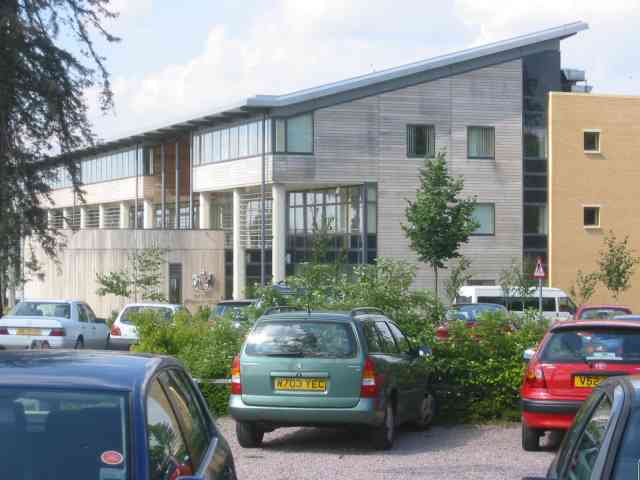
The Royal Veterinary College (RVC), a constituent college of the University of London, delivers the five-year BVetMed across its Camden campus in central London and the Hawkshead campus in Hertfordshire. A world-leading veterinary research institution, the RVC's degree is recognised by the RCVS, EAEVE, AVMA and the Australasian Veterinary Boards Council.
The standard BVetMed runs full-time over five years. The early years (1 to 2) are taught mainly at the Camden campus, after which students move to Hawkshead for the clinical years (3 to 5), home to the Queen Mother Hospital for Animals, alongside off-site placements. Students complete 20 weeks of Clinical Extra-Mural Studies across years 3 to 5, with an optional intercalated route adding a year.
Accreditation
RCVS, EAEVE, AVMA and AVBC accredited
Degree awarded
BVetMed (Bachelor of Veterinary Medicine)
Campuses
Camden (London) and Hawkshead (North Mymms, Hertfordshire)
UCAS code
D100 (D101 for the six-year intercalated route)
Selection
Multiple Mini Interview (MMI)
RVC entry requirements
| Location | London. Camden Campus and Hawkshead Campus, Potters Bar. |
|---|---|
| Course length | 5 years |
| Typical A level offer | AAA including Biology (grade A) and Chemistry (grade A) plus a third A level at grade A that does not overlap with Biology or Chemistry and is not General Studies. A pass in the science practical is required for each science (English curriculum). A* grades are not required and give no advantage. |
| Contextual offer | ABB (with an A in Biology or Chemistry) for applicants who meet the Widening Participation criteria. |
| GCSEs | At least five GCSEs at grade 7 (A) including 7-7 in Combined Science or AA in Science (Double Award) (or Biology and Chemistry, or Science and Additional Science), with at least grade 6 (B) in English Language and Mathematics. |
| Work experience | 140 hours obtained within the 18 months before the application deadline: 70 hours (about 10 full days) in one or more veterinary practices, plus 70 hours in non-clinical working environments with live animals (not the home environment, a family business or pet ownership). References covering the minimum must be available by interview. |
| How they select | Personal statement not used. A scored supplementary questionnaire, due within five days of applying, then in person multiple mini interviews (MMI) plus an observed group activity. |
| Interview format | Approximately 35 to 40 percent of applicants are interviewed. Interviews are in MMI format, with an observed group task that, combined with the MMIs, gives an overall score used to make offers. |
RVC international entry requirements
International applicants to Royal Veterinary College must meet equivalent academic grades and an English language requirement.
| International qualifications | IB Diploma with 666 at Higher Level including Biology and Chemistry; the offer is based on subject grades rather than a total points score (contextual offer 655 with a 6 in Biology or Chemistry). Many country-specific qualifications are accepted, for example a US High School Diploma with three AP exams at 555 including Biology and Chemistry. |
|---|---|
| English language | IELTS Academic 7.0 overall with at least 6.5 in each component, obtained within two years of the course start date. |
RVC veterinary medicine tuition fees
| UK / home fee | £9,790 per year (2026/27) |
|---|---|
| International fee | £50,360 per year (2026/27) |
The RVC has not yet published its 2027/28 fees; both figures shown are the most recent published (2026/27).
Common questions
What A levels do you need for RVC?+
Royal Veterinary College typically asks for AAA including Biology (grade A) and Chemistry (grade A) plus a third A level at grade A that does not overlap with Biology or Chemistry and is not General Studies. A pass in the science practical is required for each science (English curriculum). A* grades are not required and give no advantage. A contextual offer of ABB (with an A in Biology or Chemistry) for applicants who meet the Widening Participation criteria may be available. At GCSE: At least five GCSEs at grade 7 (A) including 7-7 in Combined Science or AA in Science (Double Award) (or Biology and Chemistry, or Science and Additional Science), with at least grade 6 (B) in English Language and Mathematics. Requirements are confirmed each cycle on the university's own pages (verified for 2027 entry).
What are the international entry requirements for RVC?+
Royal Veterinary College accepts IB Diploma with 666 at Higher Level including Biology and Chemistry; the offer is based on subject grades rather than a total points score (contextual offer 655 with a 6 in Biology or Chemistry). Many country-specific qualifications are accepted, for example a US High School Diploma with three AP exams at 555 including Biology and Chemistry. English language requirement: IELTS Academic 7.0 overall with at least 6.5 in each component, obtained within two years of the course start date. Read our guide for international applicants to UK vet school.
How much does it cost to study veterinary medicine at RVC?+
UK/home tuition is £9,790 per year (2026/27). International tuition is £50,360 per year (2026/27) The RVC has not yet published its 2027/28 fees; both figures shown are the most recent published (2026/27). See how much vet school costs for the full picture across the UK.
How does RVC select students?+
Royal Veterinary College selects through personal statement not used. a scored supplementary questionnaire, due within five days of applying, then in person multiple mini interviews (mmi) plus an observed group activity. Approximately 35 to 40 percent of applicants are interviewed. Interviews are in MMI format, with an observed group task that, combined with the MMIs, gives an overall score used to make offers. We prepare you for exactly this format in our vet school interview guide.
Official RVC resources
Go straight to Royal Veterinary College's own pages for the current requirements, fees and application details.
Related reading
Weigh RVC against the alternatives and plan the rest of your application.
Sources (2027 entry)
- https://www.rvc.ac.uk/study/undergraduate/bachelor-of-veterinary-medicine
- https://www.rvc.ac.uk/Media/Default/study/Undergraduate/documents/Assess%20BVetMed%202027%20How%20we%20select.pdf
- https://www.rvc.ac.uk/study/fees-and-funding/fees
- https://www.rvc.ac.uk/study/fees-and-funding/fees/tuition-fees-for-home-and-international-2027-28
Applying to RVC?
We help you decide whether RVC is right for you, and prepare for exactly how it selects. Guidance comes from Dr Rebecca, a qualified vet.
← Compare all twelve schools
Book a free call with a qualified vet
Talk through where you are with Dr Rebecca and leave with a strategic plan for your vet school application. Honest advice, with no pressure and no cost.